
How to Fix a Noisy or Squeaking Garage Door: A Step-by-Step Guide
Wednesday, July 15, 2026
Is your garage door waking up the neighbors every time you leave for work? Does it sound like a haunted house when it opens? A noisy garage door is more than just annoying—it is often a cry for help from your door’s mechanical parts.
In British Columbia, our damp weather in places like North Vancouver and Coquitlam can lead to rust and stiff parts. The good news is that many noisy doors can be fixed with some simple maintenance.
At Lions Gate Garage Doors, we want your home to be peaceful. In this guide, we will show you how to identify those scary sounds and how to silence them for good.
First: Is it Safe to Fix it Yourself?
Before you grab your toolbox, we need to talk about safety. Some parts of a garage door are under extreme tension. This includes the springs and the bottom cables. If these parts break while you are working on them, they can cause serious injury.
If you hear a loud "bang" or the door feels very heavy, you might have a broken spring. You should read our guide on signs of a broken garage door spring before you try any DIY fixes. Also, check out our post on whether it is safe to repair a garage door yourself.
If the noise is just a squeak, a rattle, or a grind, you can usually follow the steps below safely.
Step 1: Identify the Sound
Not all noises are the same. Listening closely can tell you exactly what is wrong:
- Squeaking: Usually means parts need lubrication. Metal is rubbing against metal.
- Rattling: Usually means something is loose. Bolts and screws vibrate over time.
- Grinding: This often means your rollers are worn out or the garage door opener is struggling.
- Popping: This often points to the torsion spring.
Step 2: Tighten the Hardware
A garage door moves up and down hundreds of times a year. All that vibration causes nuts and bolts to loosen.
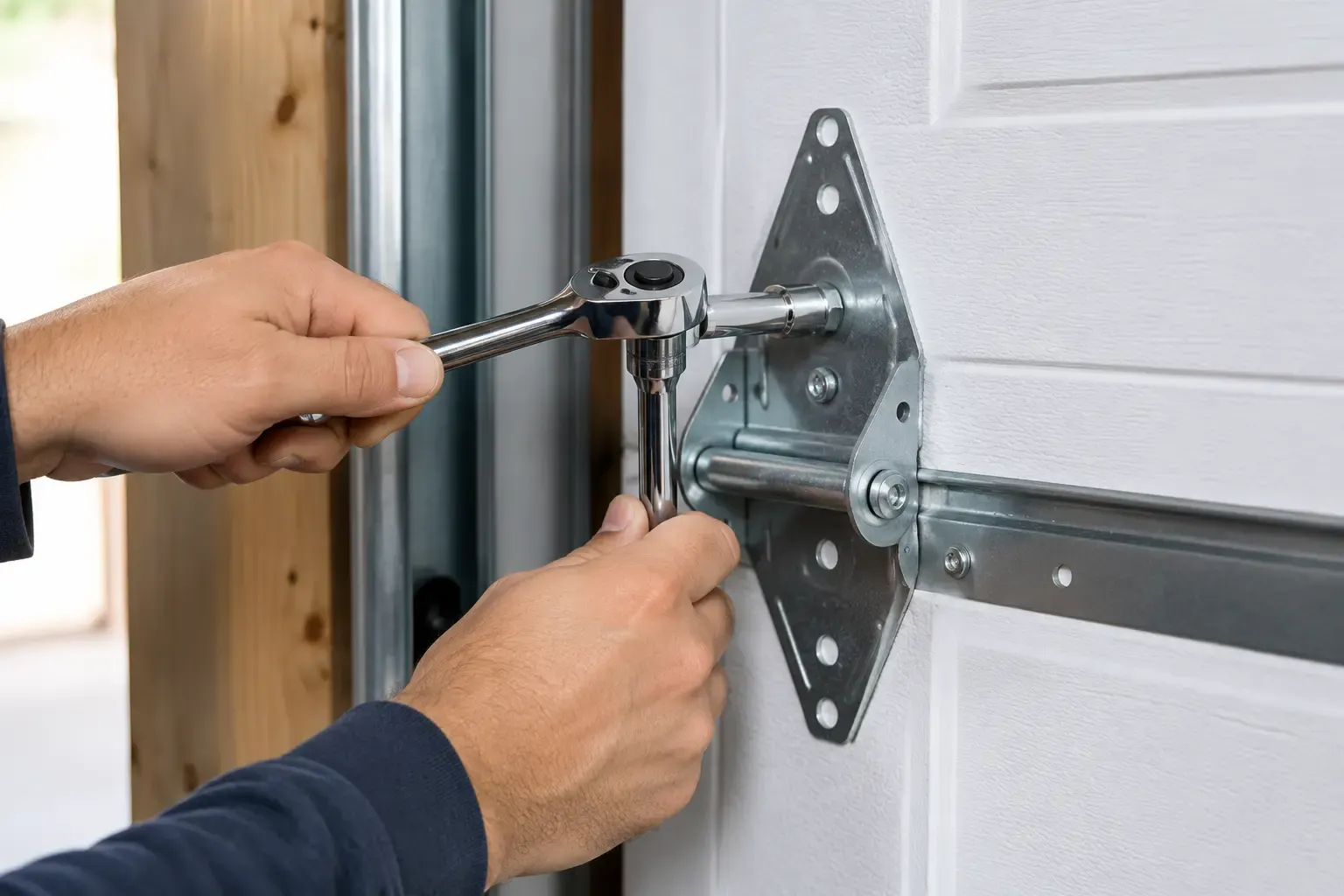
Take a socket wrench or a screwdriver and check the hinges that hold the door sections together. Check the "tracks" that are attached to the walls and ceiling. If you see a loose bolt, give it a snug turn. Do not over-tighten, as you could strip the screw holes.
Step 3: Clean the Tracks
Sometimes, the noise isn't coming from the door—it’s coming from dirt! Dust, pet hair, and debris can get stuck in the tracks. When the rollers hit that dirt, it creates a "bumpy" or "grinding" sound.
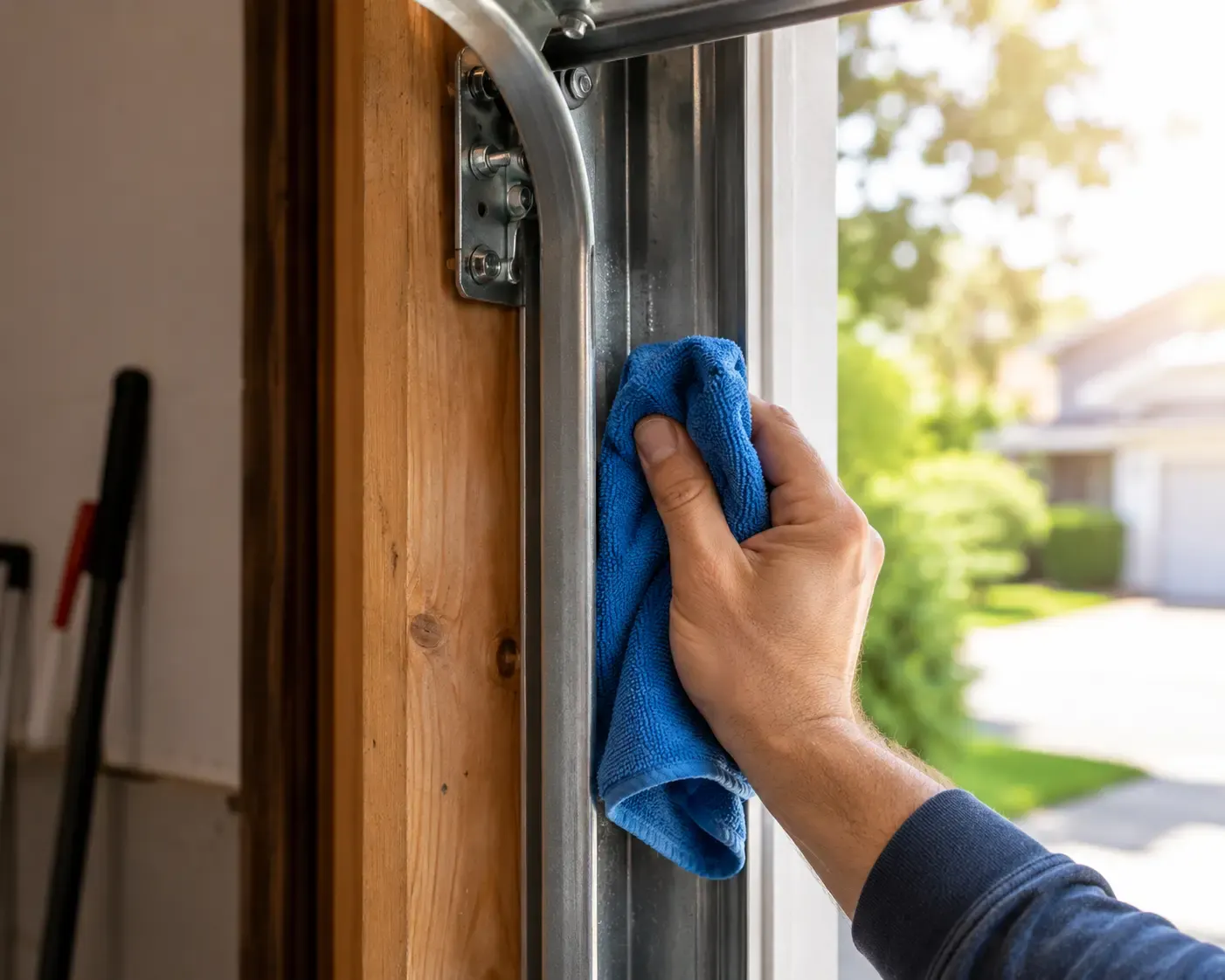
Use a damp rag to wipe out the inside of the tracks. Never put grease or oil inside the tracks. Grease actually attracts more dirt and can make the rollers slip, which makes the noise worse. The tracks should be clean and dry.
Step 4: Lubricate the Moving Parts (The Most Important Step!)
If you want a quiet door, lubrication is the "secret sauce." However, many people use the wrong stuff. Do not use WD-40. WD-40 is a cleaner/degreaser, not a long-term lubricant. It will dry out quickly and make the squeaking return.
Instead, use a Lithium-based grease or a Silicone-based spray.
Where to Spray:
- The Hinges: Spray the pivot points where the metal bends.
- The Rollers: If you have metal rollers, spray the tiny ball bearings inside the wheel. If you have nylon rollers, only lubricate the axle (the stick part).
- The Springs: Lightly spray the entire length of the springs. This stops the "clinking" sound of the coils rubbing together.
- The Bearings: Spray the circular bearing plates at both ends of the spring bar.
For a professional look at what a well-maintained system looks like, check out our maintenance portfolio.
Step 5: Inspect the Rollers
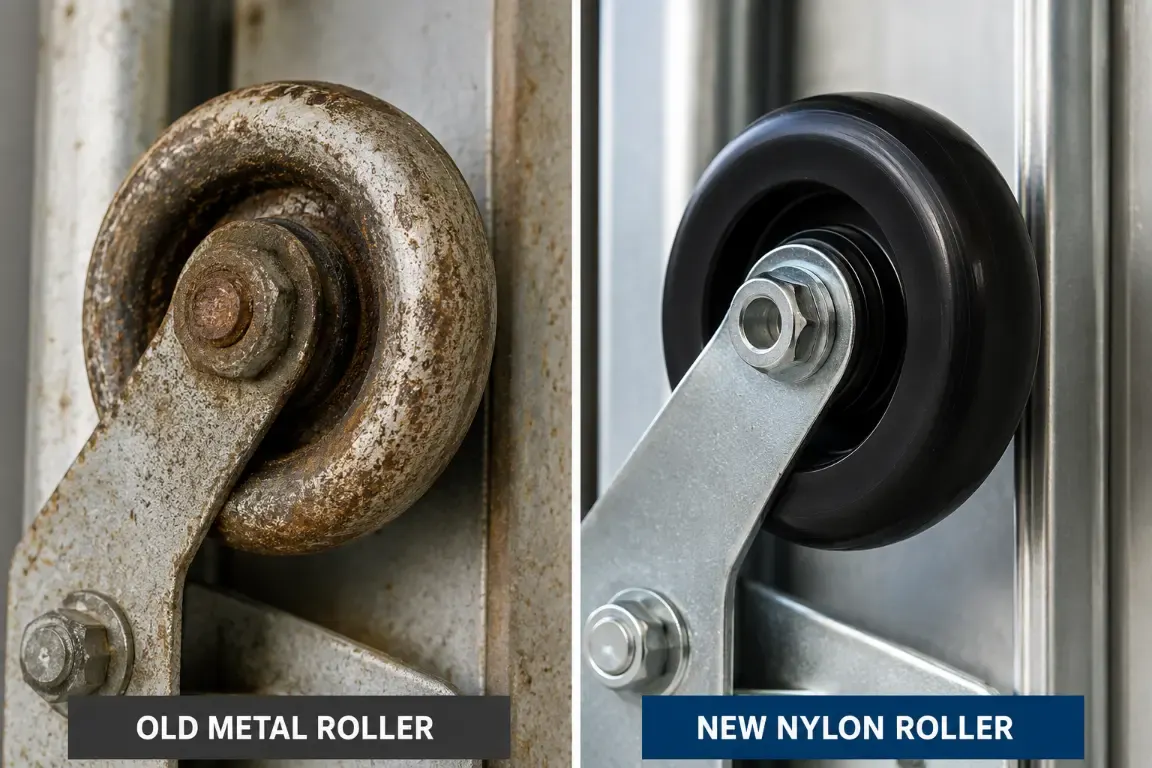
If your rollers are made of metal, they are naturally noisier. As they age, the bearings inside wear out, and they start to wobble.
Many homeowners in Surrey and Langley choose to upgrade to Nylon Rollers. Nylon rollers are much quieter because they don't create "metal-on-metal" contact with the track. If your rollers look flat, cracked, or are wobbly, it is time to replace them.
Step 6: Check the Opener Drive
Sometimes the noise isn't the door at all, it's the motor!
- Chain Drives: These are naturally noisy. If the chain is loose, it will slap against the rail. You can tighten the chain, but it will always have some noise.
- Belt Drives: These are the quietest. If your belt drive is making noise, it might need a small adjustment, or the motor itself might be aging.
If you are tired of the noise from an old motor, you might want to compare belt drive vs. chain drive openers to see if an upgrade is right for you. We carry top-of-the-line LiftMaster products that are famous for being whisper-quiet.
Step 7: Check the Weather Stripping
In BC, we get a lot of rain. If your weather stripping is old and brittle, it can "drag" against the door frame. This creates a high-pitched "scrubbing" or "squeaking" sound.
Rub a little bit of silicone spray on the rubber seals around the door. This keeps them soft and stops them from sticking to the door in the summer heat or winter cold.
When to Call the Pros at Lions Gate
If you have tightened the bolts, cleaned the tracks, and lubricated the parts, but the door is still noisy, there might be a deeper problem.
Common issues that require a professional include:
- Bent Tracks: If the track is even slightly crooked, the door will "pop" as it moves.
- Worn-out bearings: High-cycle bearings in the motor or the spring bar can fail.
- Unbalanced Door: If your door is out of balance, it puts too much stress on the motor, causing it to "groan."
Our team provides expert garage door repair in Burnaby, Vancouver, and the rest of the Lower Mainland. We have the tools to safely adjust your springs and align your tracks perfectly.
Summary Checklist for a Quiet Door
- Tighten all nuts and bolts.
- Clean the tracks with a rag (no oil!).
- Lubricate hinges, springs, and rollers with silicone spray.
- Replace old metal rollers with quiet nylon ones.
- Check your opener chain tension.
By spending just 20 minutes a few times a year on maintenance, you can double the life of your garage door and keep your home quiet.
Need a hand getting your door back to being silent? Contact us for a free estimate today!