

Garage Door Weather Seal Replacement: A Homeowner's Guide
Thursday, November 05, 2026
Garage door weather seal replacement can help reduce drafts, dirt, water entry, and gaps around the largest opening in your garage. The right seal depends on where the gap sits: along the bottom of the door, at the side jambs, or across the top.
Replacing cracked rubber may solve a simple issue, but a large uneven gap can also mean the door is out of alignment or the concrete floor needs attention. Start by finding the cause, not just buying the thickest seal.
Wet weather makes door sealing worth checking for homeowners in Vancouver, Surrey, Burnaby, and nearby communities. A tight perimeter helps protect stored items and can make an attached garage more comfortable. This guide explains seal types, signs of wear, safe inspection, and when professional garage door repair is the better choice. You can also learn about Lions Gate Garage Doors and its local services.
Quick takeaways
- Match replacement seals to the bottom retainer profile.
- A seal may not solve a drainage or door-alignment issue.
- Do not work on bottom brackets, cables, or springs.
What is a garage door weather seal?
A weather seal is a flexible barrier placed where a closed door meets the frame or floor. The bottom seal sits along the lower door section. Side and top weather stripping attaches around the opening, while some doors have seals between sections.
Their job is to limit air gaps and keep ordinary wind-driven debris and light moisture from passing through. They are not a substitute for a watertight building envelope or proper site drainage.
A seal must work with the door's normal movement. It should touch the right surface when the door closes without dragging too hard while the door opens. Different door makers use different retainer shapes, so a replacement bottom seal must match the channel or mounting system on the door. Buying by length alone can lead to a poor fit and new gaps.
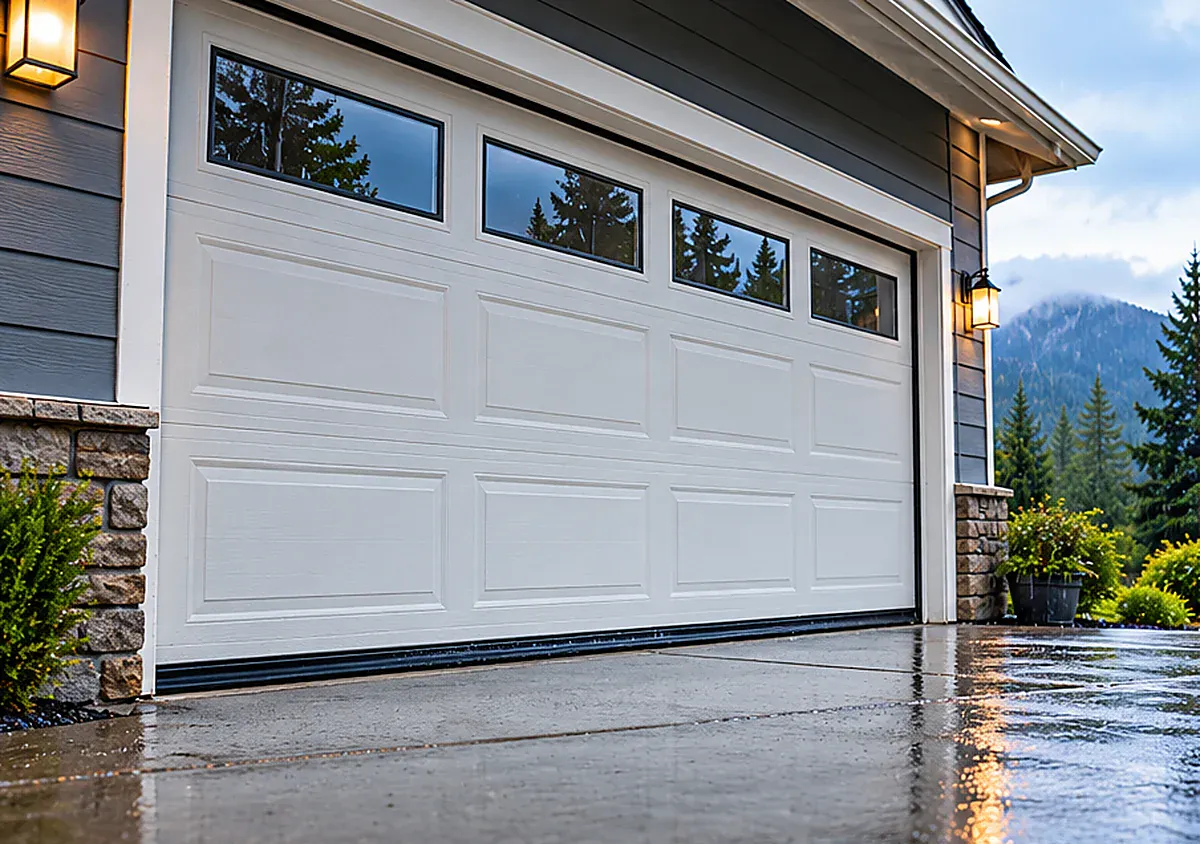
Signs it is time to replace weather stripping
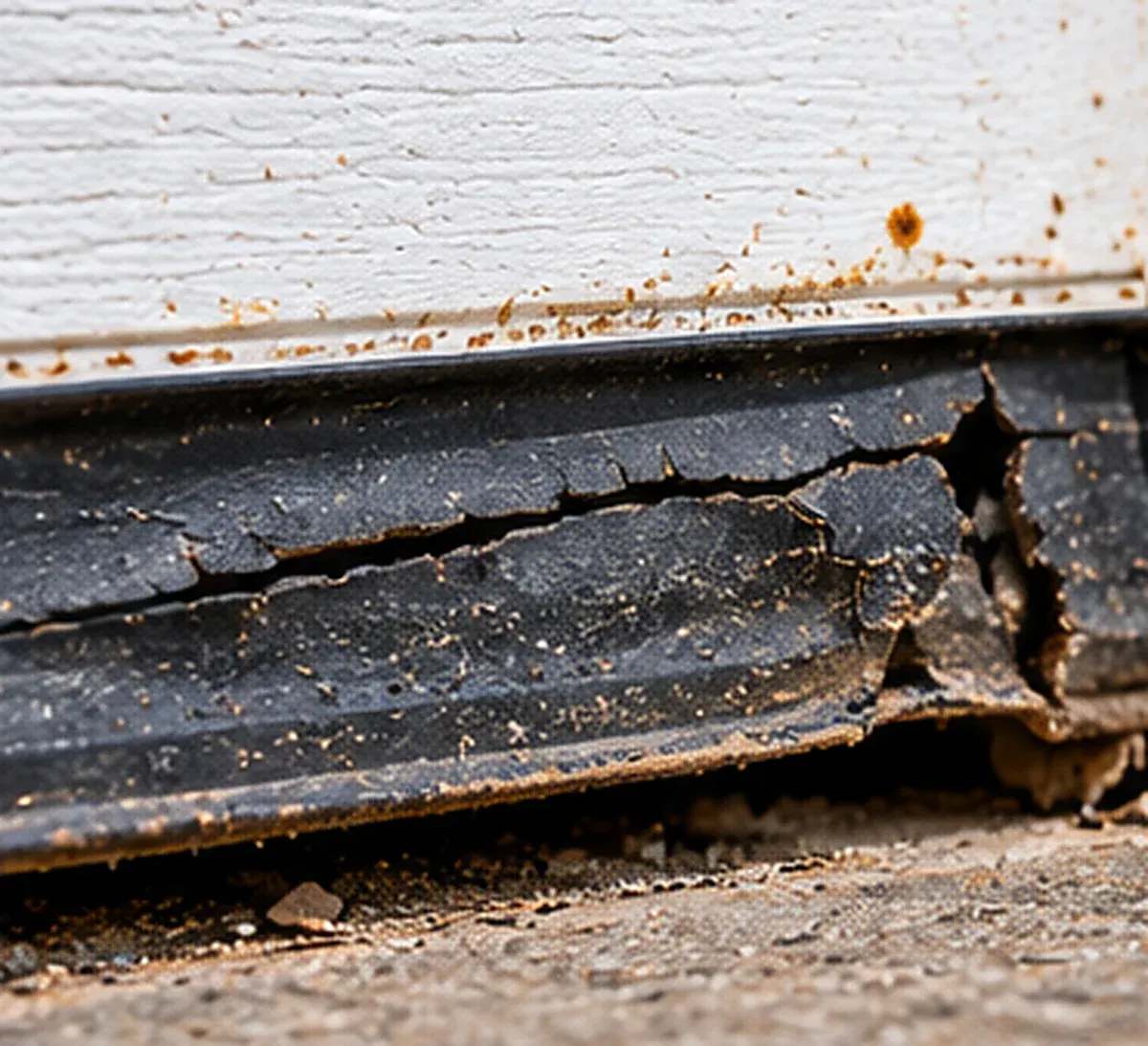
A worn seal may let water, air, and pests enter. Look for these signs when the door is shut:
- Daylight along the bottom or sides.
- Cracks, tears, or hard spots in the rubber or vinyl.
- Water marks or puddles near the door after rain.
- Drafts, leaves, or dust blowing in.
- A loose seal that no longer stays in its track.
A gap is not always a bad seal. If one corner of the door sits higher than the other, the problem may involve the door's balance, tracks, or floor slope. If the door scrapes, shakes, or will not close evenly, have the mechanical problem inspected first. Adding layers of rubber to hide a crooked door is not a lasting solution and may place extra stress on the opener.
Bottom seal: the first place to check
The bottom rubber touches the garage floor and is exposed to water, grit, and daily movement. Some designs use a T-shaped or bead-style insert that slides into an aluminum or plastic retainer. Others use a different profile.
To choose a replacement, identify the current retainer design and confirm the door's width. A seal that is too thin may leave gaps, while an oversized one may fold or jam.
If the seal is worn but the door is straight, replacement may be straightforward for a trained technician. Take a photo of the seal end and the full bottom edge so the correct profile can be identified. Do not remove the bottom brackets or cable fixtures to access the rubber.
Those parts may be under dangerous mechanical tension. The goal is to replace the seal, not disturb the counterbalance system.
Which garage door weather seal do you need?
Seal location
Main job
Fit check
Bottom seal
Close gap to garage floor
Match retainer and end profile
Side / top strip
Limit drafts around frame
Check jamb gap and contact
Floor threshold
Help block water at slab
Check drainage and floor slope
Section joints
Seal between door sections
Usually part of door design
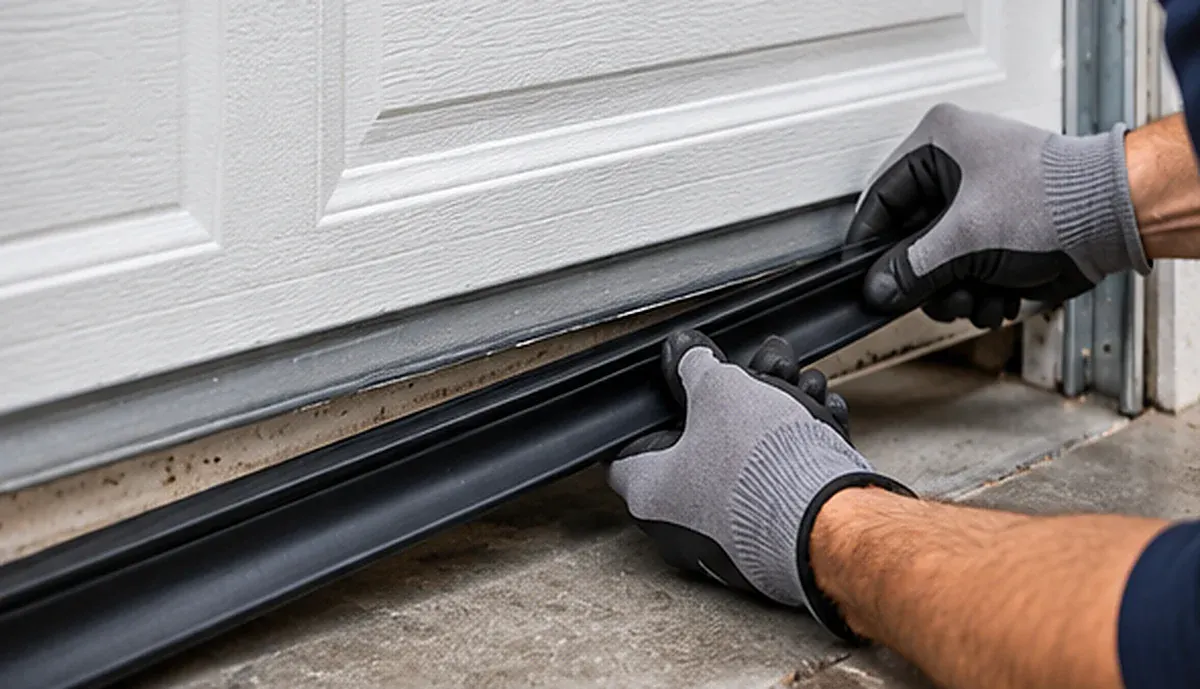
Side and top seals: often missed
Side and top weather stripping is usually fitted to the garage opening rather than to the moving sections. It forms a flexible contact surface as the closed door meets the jambs and header. If it curls, cracks, or stands too far from the door, wind and insects can find a path inside. A fresh bottom rubber cannot close a gap along the upper corner or vertical edge.
Look at the whole perimeter when the garage is safely closed. From inside, daylight can show areas worth noting, but do not place your hands near moving sections. If siding, trim, or framing has shifted, the weather strip may need a different position or backing repair. Good contact should not stop the door from closing or cause the opener to push harder than normal.
What about a garage floor threshold seal?
A floor threshold is a strip attached to the concrete that meets the bottom edge when the door closes. It may help where a small, even gap remains or where runoff reaches the entrance. It is not suitable for every floor or doorway. Poorly placed thresholds can trap water inside or interfere with safe door travel, and they do not correct major settlement or drainage issues.
Before adding a threshold, check where water comes from. If rainwater runs downhill into the garage, the site may need drainage work beyond a door seal. If water enters only at the bottom corners, the problem may involve a damaged seal or an uneven floor. The existing rodent-proofing article also discusses how bottom and perimeter gaps invite pests, but weather sealing and pest control are not identical tasks.
Can you replace garage door weather stripping yourself?
Some seal work is simple, but not every fault is a seal problem. Before starting, check:
- The exact shape of the seal and its bottom retainer.
- The width of the door and any floor slope.
- Whether the retainer is bent, cracked, or loose.
- Whether the door closes level without scraping.
- Whether work would involve cables or bottom brackets.
For many homeowners, the most useful DIY step is inspection. Take photos, measure the clear opening from a safe position, note the type of existing strip, and check whether the door closes level. A professional can fit the seal and confirm that the finished door still opens, closes, and reverses safely. If movement changes after a seal is fitted, stop using the opener until the system has been checked.
Making weather seals last longer
Keep grit and leaves away from the door's bottom edge. Clean the seal with a mild method recommended by the maker, and avoid harsh chemicals that can dry or damage rubber. Check for cuts after cold spells or when moving large items through the garage.
A seal may last longer when it does not rub against a sharp retainer or uneven concrete. The right care depends on the seal material and site conditions.
Review the door a few times a year, especially before and after wet seasons. Notice whether a gap is getting wider or whether water now appears in a new place. The spring and fall maintenance checklist offers broader upkeep reminders. You do not need to replace every seal on a fixed schedule; replace the parts that no longer perform properly.
Frequently asked questions about garage door seals
Will a new bottom seal stop all rainwater?
Not always. It can help with ordinary gaps, but drainage, floor slope, and side openings also matter. Water running toward the garage may require work beyond a rubber seal.
How do I know which bottom seal fits?
Check the existing retainer profile and manufacturer details. Garage doors use different channels, so the door width and the way the rubber attaches both matter.
Will weather stripping lower heating bills?
It can reduce air leakage, but exact savings depend on the garage and home. Do not expect one seal to fix all heat loss in an uninsulated space.
Seal the opening without stressing the door
A good seal should make the garage cleaner and more comfortable while leaving the door free to operate safely. If you see torn weather stripping, drafts, or standing water near the entrance, contact Lions Gate Garage Doors for an inspection. Learn about garage door repair or send a request through the contact page.