

Garage Door Cable Off Track: What to Do Safely
Thursday, October 15, 2026
A garage door cable off track is a warning that your door may no longer be balanced or supported as it should be. You may see a loose steel cable, a crooked door, or a cable wrapped unevenly around a drum near the top of the opening. Stop using the door and keep people away from it. A garage door has heavy sections and parts that hold strong tension, so a small-looking cable problem can become dangerous very fast.
In this guide, we explain what lifting cables do, why they slip, what you can check without touching moving parts, and when to call a professional. Homeowners across Surrey, Vancouver, Burnaby, and Langley face the same basic safety risk. If you already need help, visit Lions Gate Garage Doors or read about our garage door repair service.
Quick takeaways
- A loose lift cable is a safety issue, not a minor adjustment.
- Never rewind a cable or loosen a bottom bracket yourself.
- Ask a technician to check springs, drums, tracks, and door balance.
What does it mean when a garage door cable comes off track?
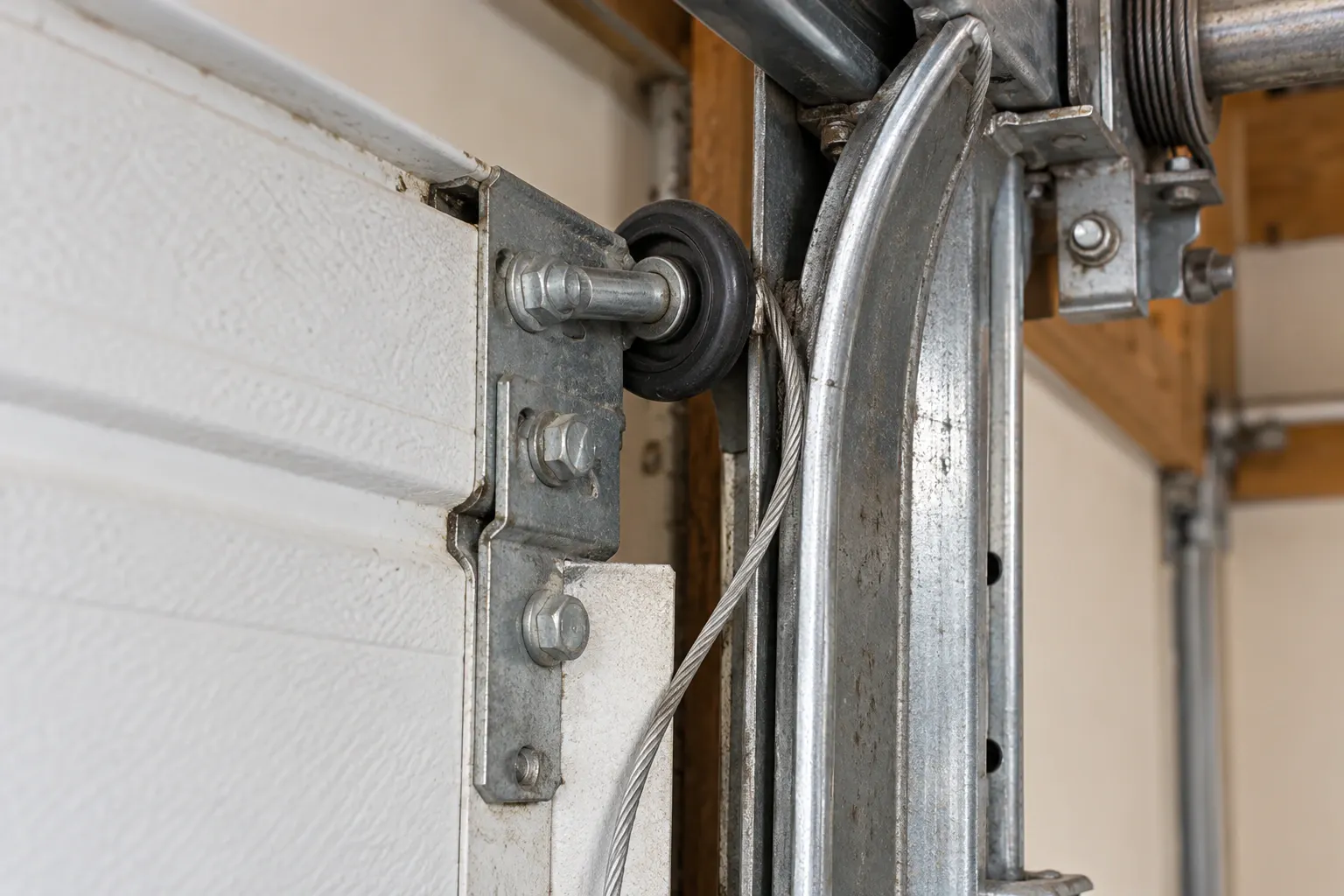
Garage door lift cables connect the bottom of the door to the spring system, often by winding around cable drums on a torsion shaft. The springs help counterbalance the door's weight. As the door travels, the cables must stay seated and carry tension evenly.
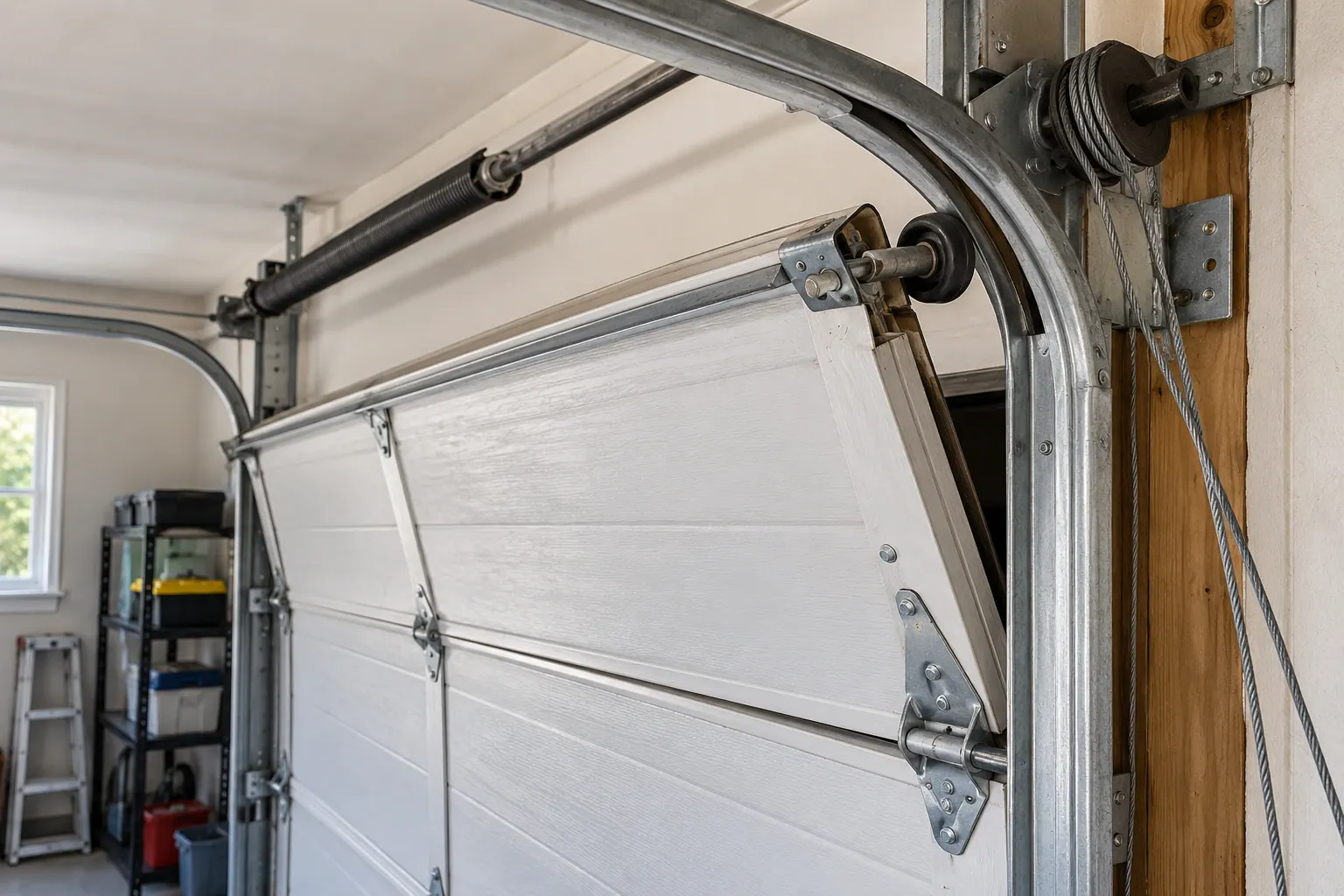
If one cable slips from its drum or becomes slack, the door may tilt, bind, or stop halfway through its travel. The words “off track” can also describe a roller coming out of a track, but that is a different fault.
The difference matters because a cable fault is not fixed by simply pushing a roller back into place. The spring, drum, track, bottom bracket, and cable may all need inspection. If the cable is hanging loose, do not assume it is harmless. It can still be linked to parts that store high force, even when the opener is unplugged.
Warning signs you should not ignore
A loose lift cable may affect how the whole door moves. Watch for these clear warning signs:
- Crooked door: One side sits higher than the other.
- Loose cable: A steel cable hangs near the track or drum.
- Bad movement: The door jerks, drags, or stops partway.
- Visible wear: Cable strands look frayed or rusty.
- Loud bang: A spring may have broken before the cable went slack.
Some cable problems happen after a spring breaks. A broken spring can remove the support that keeps cables under normal tension. Review our guide to the signs of a broken garage door spring if you heard a loud bang before the door stopped working. These signs can overlap, so a visual clue alone is not a complete diagnosis.
What the symptom may mean
What you see
Possible issue
Safe next step
Door hangs crooked
Cable or spring load may be uneven
Stop use; call for inspection
Cable hangs by a track
Cable may have left its drum
Do not touch or rewind it
Door moves then binds
Track, roller, or cable fault
Leave door in place
Loud bang before failure
Possible broken spring
Keep clear and book repair
What to do right away
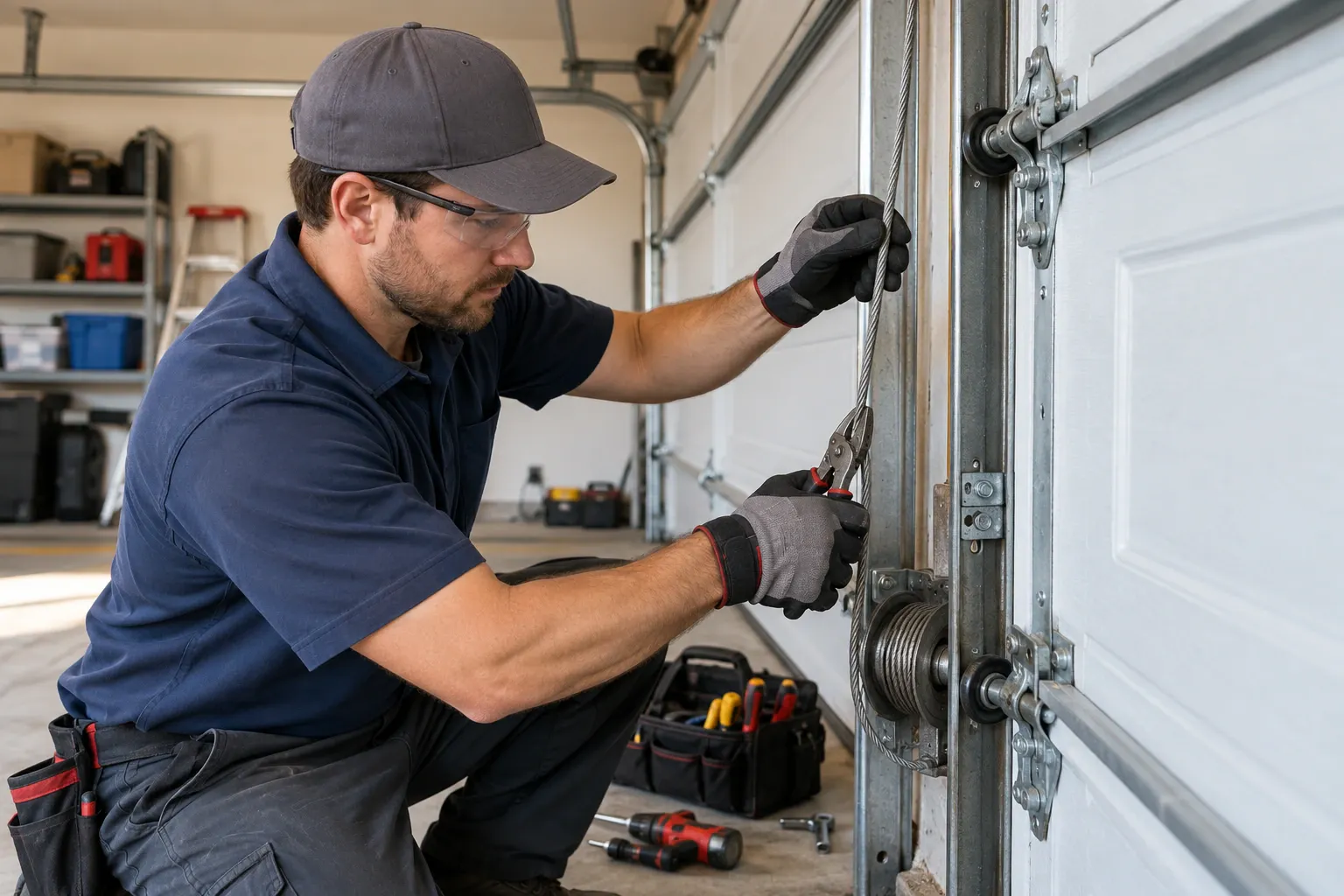
The safest choice is to leave the door where it stopped. Follow these steps before you call for help:
- Stop using the remote, keypad, and wall switch.
- Keep children, pets, and vehicles clear of the opening.
- Never walk under a crooked or partly open door.
- Do not pull the release cord on an open or unbalanced door.
- Take photos from a safe spot and tell the technician what happened.
Next, take a photo from a safe distance, without entering the door's path. Note whether the door is level, whether a cable looks loose, and whether the problem began after a bang or impact. You can share these details with a technician when booking service.
Do not pull the emergency release on an open, unbalanced door. The power-outage garage door guide also explains why the release cord must be treated with care.
Why garage door cables slip off their drums
One possible cause is uneven spring tension or a broken spring. The drum then loses the even cable load it needs, allowing the cable to slacken. Another cause is an obstruction that stops one side of the door before the other.
Damaged rollers, bent track sections, and worn bottom brackets can also change how the door travels. In some cases, an impact from a vehicle or object shifts the system out of line.
Cables themselves wear out, too. Steel strands may fray, rust, or become damaged over time. A wet Lower Mainland climate makes regular visual inspection worthwhile, especially if water reaches door hardware.
Still, rust alone does not prove why a cable came loose. A technician should check the full counterbalance system rather than replacing one visible part without looking for the cause.
Can you put a garage door cable back on yourself?
Putting a cable back on a drum is not a safe DIY task for most homeowners. The work can involve spring tension, winding drums, bottom brackets, and the door's weight. Releasing or tightening the wrong fastener may cause a sudden movement or serious injury.
Disconnecting electrical power does not remove mechanical tension from the spring system. A cable that appears loose can also tighten unexpectedly when another part moves.
There is a clear line between safe observation and risky repair. You may look from a safe place, note the symptoms, and arrange service. You should not loosen drum set screws, remove a bottom fixture, wind a torsion spring, or use clamps to force the door straight. Our existing article on whether garage door repair is safe to do yourself explains why cables and springs belong in trained hands.
How a technician finds the real problem
A repair visit begins with checking whether the door can be made safe to work on. The technician can inspect the cable drums, lift cables, rollers, tracks, springs, and brackets. They will look for the reason the system lost its normal travel path. Depending on the damage, the solution may involve replacing a worn cable, repairing a spring issue, realigning hardware, or correcting a track problem before testing door balance.
A proper repair should also include checking the opener's operation and safety features after the door works smoothly by itself. The opener should guide a balanced door, not drag a damaged one into place. Ask what caused the cable to slip and whether other worn parts may soon need attention. That explanation helps you understand the repair rather than paying for a quick reset that fails again.
How to reduce the chance of another cable problem
Watch for changes in door movement and sound. A door that begins to tilt, shake, rub, or stop in an unusual place deserves attention before it jams. Keep the track area free of stored items, inspect visible cables for rust or fraying without touching them, and arrange maintenance when movement becomes uneven. Do not spray grease over frayed cables or tighten parts in the hope of curing a balance problem.
Routine inspections are especially useful on doors used many times each day. The spring and fall garage door maintenance checklist covers simple upkeep and warning signs. Preventive care cannot stop every failure, but it can reveal damage before a stuck door blocks a driveway or traps a vehicle.
Garage door cable off track: common questions
Can I keep using the door if only one cable is loose?
No. One loose cable may mean the door is carrying weight unevenly. Continued use can damage the door and may put someone at risk. Stop operating it and arrange an inspection.
Is a cable problem the same as an off-track roller?
No. Cables carry and balance part of the door's load, while rollers guide the door through its tracks. Both faults can appear together, but each needs its own diagnosis.
Will replacing the opener fix a slipped cable?
Usually not. The opener is not designed to correct damaged cables or spring imbalance. The mechanical door system needs to work safely before opener performance can be judged.
Get help with a cable or off-track garage door
A cable that has slipped from its drum is a reason to stop, not a reason to force another opening cycle. Lions Gate Garage Doors provides garage door repairs across the Lower Mainland, including help with cables and off-track doors. You can contact the team or request a garage door estimate with photos and a short description of the problem.