
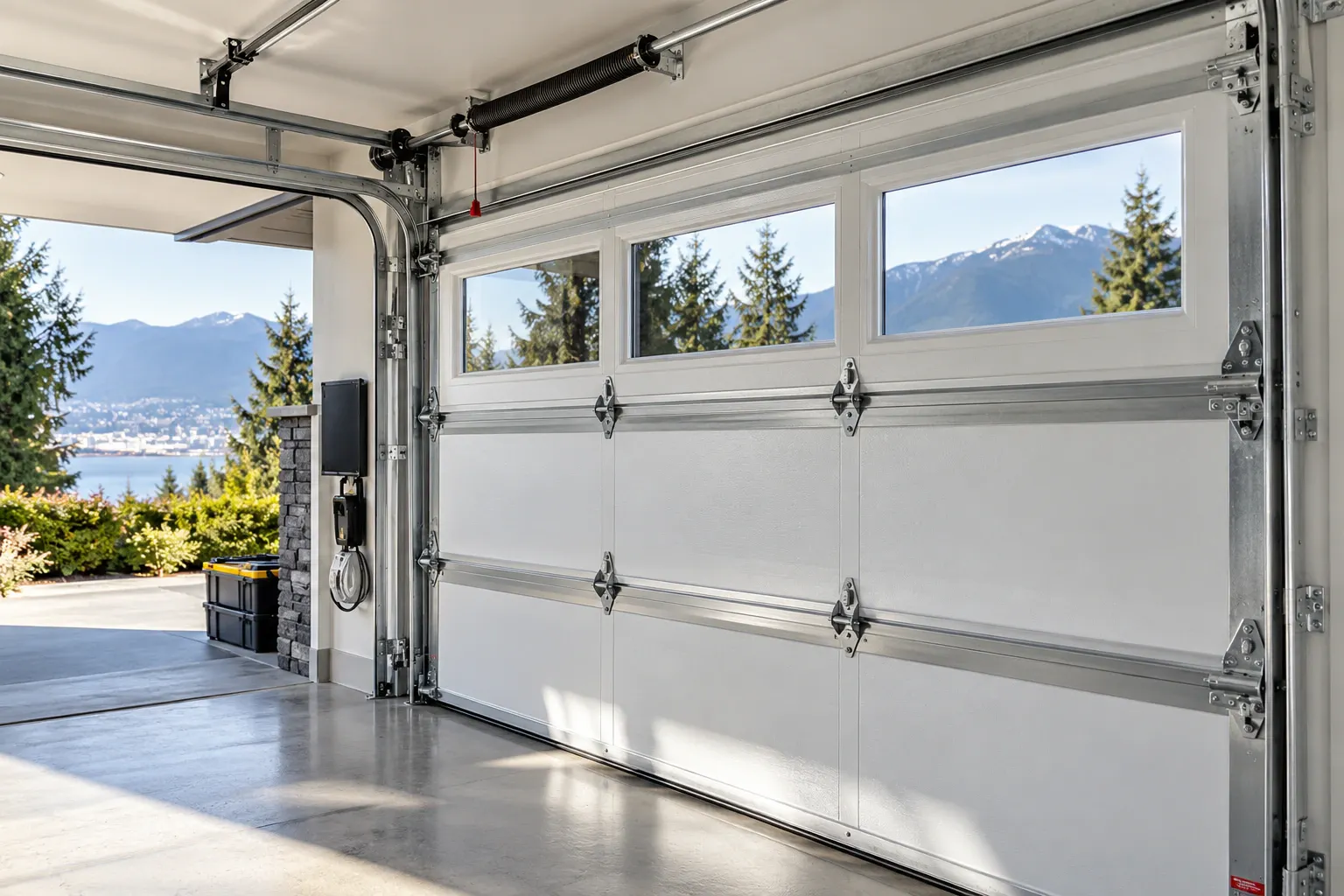
Best Garage Door Material for Vancouver Weather: What Lasts?
Thursday, September 17, 2026
The best garage door material for Vancouver weather is usually a well-finished, corrosion-resistant option that suits your home's exposure and the amount of care you can give it. For many homeowners, insulated steel offers a good mix of strength, design choices, and value. Aluminum can work well for modern styles, while wood offers natural character but needs more upkeep. No single material wins for every coastal property, attached garage, or budget.
Vancouver and the Lower Mainland get long wet periods, changing temperatures, and wind-driven rain. Your garage door needs more than a good-looking front panel. Its finish, seals, hardware, and installation all help keep moisture out and support smooth use. This guide from Lions Gate Garage Doors looks at material choices before you plan a garage door installation.
Quick takeaways
- Coated steel suits many homes, but finish care matters.
- Aluminum handles moisture well but can dent.
- Wood looks warm yet needs the most routine finish work.
Why the Lower Mainland climate changes your choice
Vancouver-area homes face long wet periods and cool, damp air. Before choosing a material, think about:
- Moisture: Water can reach panel edges, hinges, and lower tracks.
- Salt exposure: Homes near the coast may need more care against corrosion.
- Sun: Bright sun can fade finishes on exposed doors.
- Upkeep: Some finishes need much more work than others.
- Garage use: An attached or used garage may need insulation.
Think about the garage's position. Is it under a heated room, attached to living space, or separate from the house? Does the door face the wind, receive direct sun, or sit close to the street?
A sheltered, detached garage may have different priorities from an exposed double garage. The best choice combines the right material with insulation, finish quality, sound hardware, and a properly installed weather seal.
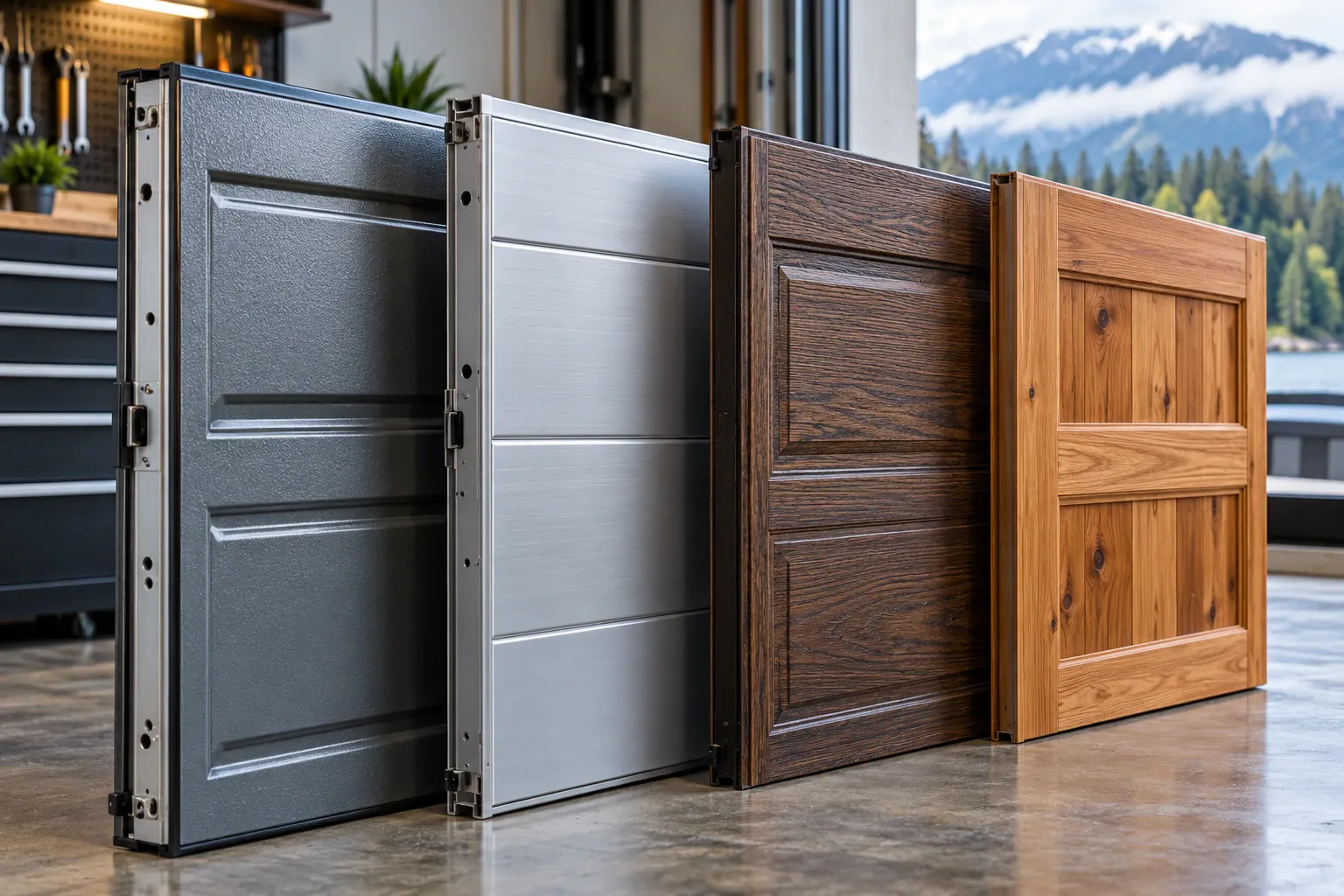
Steel garage doors: practical and versatile
Steel is a common choice because it offers many panel styles, insulation levels, and finish options. It can suit a traditional raised-panel home or a clean modern design. Insulated steel doors are often built with layers that add stiffness and reduce sound. A quality factory finish can resist normal weather well, but scratches that reach bare metal should be repaired before rust starts.
Steel is not maintenance-free. Look at the product's coating, exposed edges, hinge areas, and the manufacturer's care guidance. For a damp driveway, bottom seals and proper drainage matter as much as the steel skin. Steel-Craft garage door options can give you examples of styles and insulated designs to compare, but choose a specific series based on its published specifications.
Aluminum and glass: modern looks with trade-offs
Aluminum-framed garage doors are popular in modern designs, especially where homeowners want a clean grid or full-view glass. Aluminum does not form red rust like untreated steel, which can be helpful in wet settings. It may still corrode or show wear under some conditions, and certain finishes or mixed-metal hardware need care. The frame design and glass type have a large effect on price and thermal comfort.
Full-view glass lets daylight enter the garage, but it may also reduce privacy. Check whether the glass is clear, frosted, or another approved type, and compare insulation values where available. Large glazed sections may offer lower thermal performance than a heavily insulated solid panel. Read the site's existing guide to full-view glass garage door safety and energy efficiency before choosing this style.
Wood garage doors: classic appearance, more care
Real wood can give a home a warm, custom look that painted metal does not fully copy. It suits some heritage, craftsman, and carriage-house designs. The challenge in Vancouver's damp climate is keeping moisture away from vulnerable joints and surfaces. Paint, stain, or another approved protective finish may need regular inspection and renewed treatment according to the maker's instructions.
Wood also needs careful construction and installation to limit swelling or movement. A heavy wood door requires springs, tracks, and an opener that are suited to its weight. Wood-look steel or other composite finishes may be an alternative for homeowners who want a natural style with less surface care. Compare samples in outdoor light instead of relying on small photos alone.
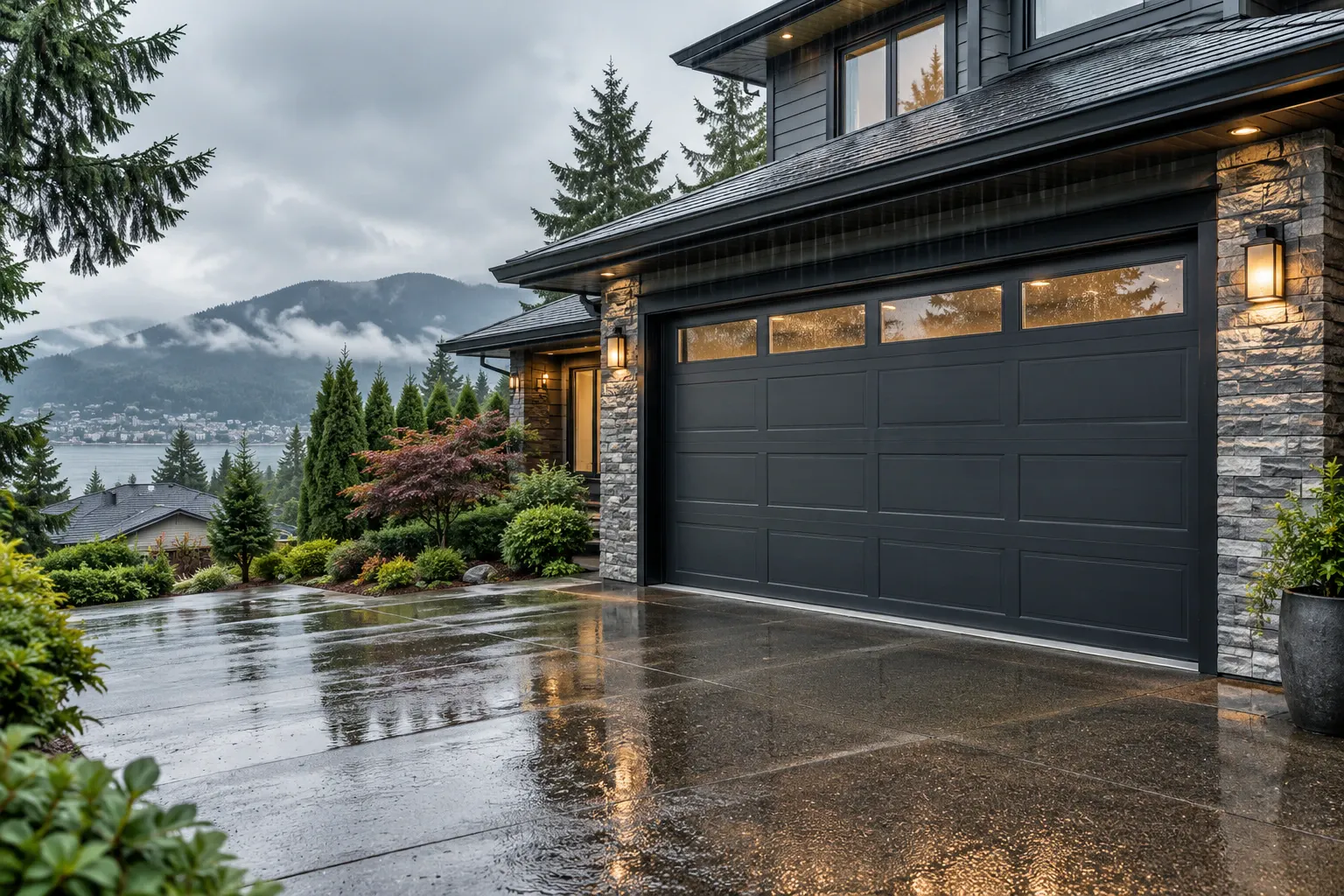
Is insulation worth paying for in Vancouver?
Insulation can be valuable in a garage connected to the house, especially if living space sits next to or above it. It may improve comfort and reduce noise, but energy savings depend on more than the door's stated R-value. Wall insulation, air leaks, door-opening habits, and how the garage is used all matter. An insulated panel with large gaps at the edges will not perform as well as it could.
Look for the published R-value for the exact door and check whether it describes the panel or a tested assembly. Ask about weather stripping around the perimeter and between sections. If you are choosing between two models, check material thickness, insulation type, window options, and the seals included in installation. The existing BC garage door cost guide explains how insulation affects purchase decisions.
What matters beyond panel material
The door material is only one part of a good purchase. Ask about these details, too:
- Factory coating and protection at exposed edges.
- Bottom, side, and top weather seals.
- Insulated sections and suitable window glass.
- Hinges, rollers, springs, and track condition.
- Warranty terms for the finish, panels, and hardware.
Colour and finish have practical effects, too. Dark colours may become hotter in direct sun, while lighter tones can show grime differently. Check the manufacturer's recommendations for paint and cleaning products.
If your driveway is exposed or near salt air, ask which hardware coatings are suitable. These details often make a greater long-term difference than choosing a product only because it is labelled “weatherproof.”
Which material is right for your home?
For low-fuss daily use, start by comparing insulated steel models with a durable finish. If you prefer a modern look and natural light, review aluminum-and-glass doors but check privacy and thermal needs. If the house calls for real wood, budget for ongoing finish care. Your door size, garage attachment, design goals, and total project cost should guide the final answer, not a single material ranking.
It helps to view actual completed projects before buying. Lions Gate's installation portfolio includes local door styles and project examples. You can also explore the garage door product range and ask which models best suit the exposure, insulation needs, and appearance of your property.
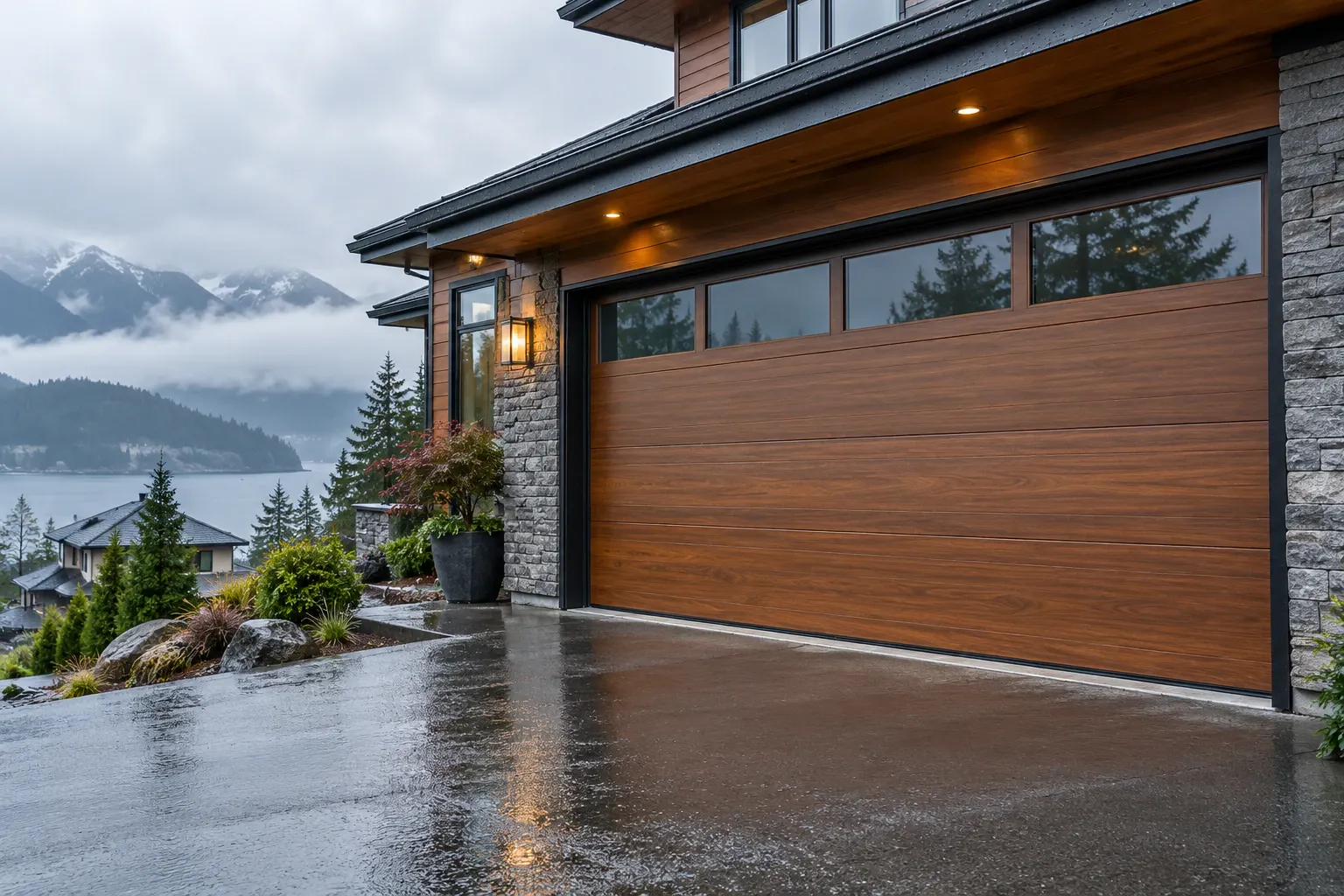
Garage door materials for wet coastal weather
Material
Good points
Main trade-off
Coated steel
Strong choice; insulation options
Scratches can expose rust-prone areas
Aluminum / glass
Modern look; resists red rust
Dents and glass heat loss can matter
Real wood
Warm, classic appearance
Needs regular finish care
Composite / fibreglass
Can resist moisture; style options
Check product-specific finish and impact limits
Frequently asked questions about garage door materials
Will a steel garage door rust in Vancouver?
Steel can rust where protective coatings are damaged or moisture reaches exposed metal. A quality finish, correct care, and good drainage help lower that risk, but no door should be treated as maintenance-free.
Are glass garage doors too cold for an attached garage?
It depends on the glass and frame design, seals, and garage use. Compare actual thermal specifications with insulated solid-panel alternatives before choosing a full-view door.
Is wood a bad choice for a rainy climate?
Not always. Wood can work when it is built and finished for exterior use and the owner is willing to maintain it. Neglected finishes make moisture damage more likely.
Plan a door for your weather, home, and budget
The best garage door material is the one that performs well in your exact setting and still fits the way you want the home to look. Lions Gate Garage Doors helps homeowners compare materials and offers installation services across the Lower Mainland. Request an estimate with your preferred style and insulation goals.