
Why Garage Door Torsion Springs Mostly Break in Winter
Tuesday, February 03, 2026
Why Garage Door Torsion Springs Mostly Break in Winter
And the Warning Signs You Should Never Ignore
Garage door torsion springs are the unsung heroes of your home. They do the heavy lifting—literally—counterbalancing hundreds of pounds so your opener can move the door with ease. But if you’ve ever been jolted awake by a loud "bang" in the garage on a freezing January morning, you know that winter is their greatest enemy.
At Lions Gate Garage Doors Ltd., we see a massive spike in service calls for broken springs as soon as the temperature drops in Surrey and across the Lower Mainland. Here is why the cold is so hard on your door, and how to know if you're headed for a breakdown.
Why Winter is "Snap Season" for Torsion Springs
1. Cold Temperatures Make Steel Brittle
Most springs are made of high-tensile carbon steel. Like any metal, steel loses its elasticity when it gets cold. Think of a paperclip: it bends easily at room temperature, but if it's frozen, it's more likely to snap. When your door opens, those cold coils are forced to flex; if they are too brittle, they simply fracture.
2. Metal Contraction Increases Stress
Physics isn't on your side in the winter. Cold causes the metal coils to contract and tighten. This microscopic "shrinking" increases the internal tension of the spring even when the door is closed. A spring that was already "on its last legs" in September will often give out under this added thermal stress.
3. Thickened Lubricants & Added Friction
Standard lubricants can gum up or harden in the cold, turning into a sticky paste rather than a slippery coating. This forces the spring to work harder to overcome the friction of the rollers and tracks, leading to premature fatigue.
💡 Pro-Tip: Using a silicone-based or lithium spray specifically rated for low temperatures can save your springs (and your sanity) during a BC cold snap.

5 Warning Signs Your Spring is Failing
If you notice these signs, your spring is either already broken or seconds away from snapping. Do not attempt to pull the red emergency release cord if the door is open, as it may crash down.
Sign | What it Means |
The "Gunshot" Sound | A loud bang in the garage is usually the sound of a spring releasing all its stored energy at once. |
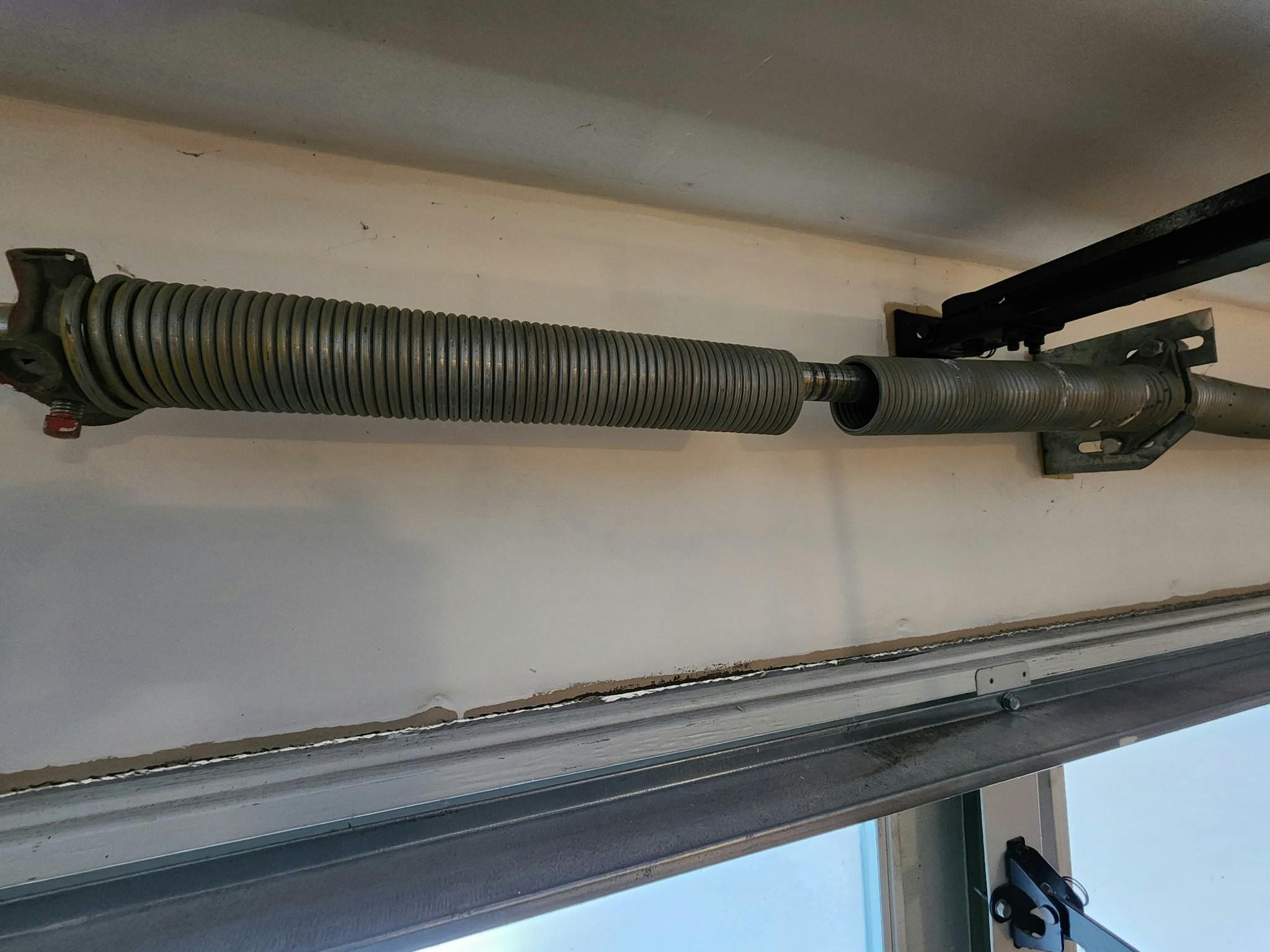
The 2-Inch Gap | Look at the metal bar above your door. If the spring looks like it's been cut in two, it’s broken. |
Heavy Lifting | Try to lift the door manually. If it feels like it weighs 300 lbs, the spring is no longer doing its job. |
Jerky Movement | If the door starts to open but then stops or goes crooked, the balance is gone. |
Slack Cables | If the cables on the sides are hanging loose or "bird-nesting," the tension from the spring has vanished. |

Why DIY is Not an Option
We’ve seen the YouTube tutorials too, but here’s the reality: Torsion springs are under enough pressure to cause permanent injury or death if they slip. At Lions Gate Garage Doors, we use specialized winding bars and professional-grade calibration tools to ensure the job is done safely. Your safety is worth more than the cost of a service call.
Prevent the Winter Breakdown
Don't wait until you're backed out of the driveway and can't get the door back down. A quick Winter Tune-Up includes:
- Checking the "balance" of the door.
- Applying cold-weather lubricant to all moving parts.
- Estimating the remaining "cycles" left in your springs.
Need a Professional? We’re Local.
If your door is groaning, straining, or refuses to budge, give the experts at Lions Gate Garage Doors Ltd. a call. We know Surrey winters, and we know how to get your door back on track—fast.