
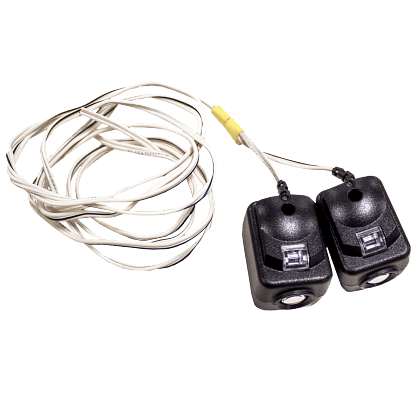
Garage Door Photo Eye Troubleshooting
Tuesday, February 17, 2026
What are Garage Door Photo Eye Safety Sensors (And Why Do They Matter?)
The invisible line of defense keeping your family safe.
If your garage door starts to close and then suddenly reverses for no apparent reason—often accompanied by the opener light flashing—you aren’t dealing with a ghost. You’re likely dealing with a "photo eye" issue.
At Lions Gate Garage Doors Ltd., we believe these small sensors are the most critical components of your door system. Here is everything you need to know about how they work, why they fail, and how you can fix them yourself.
How Do Photo Eye Sensors Work?
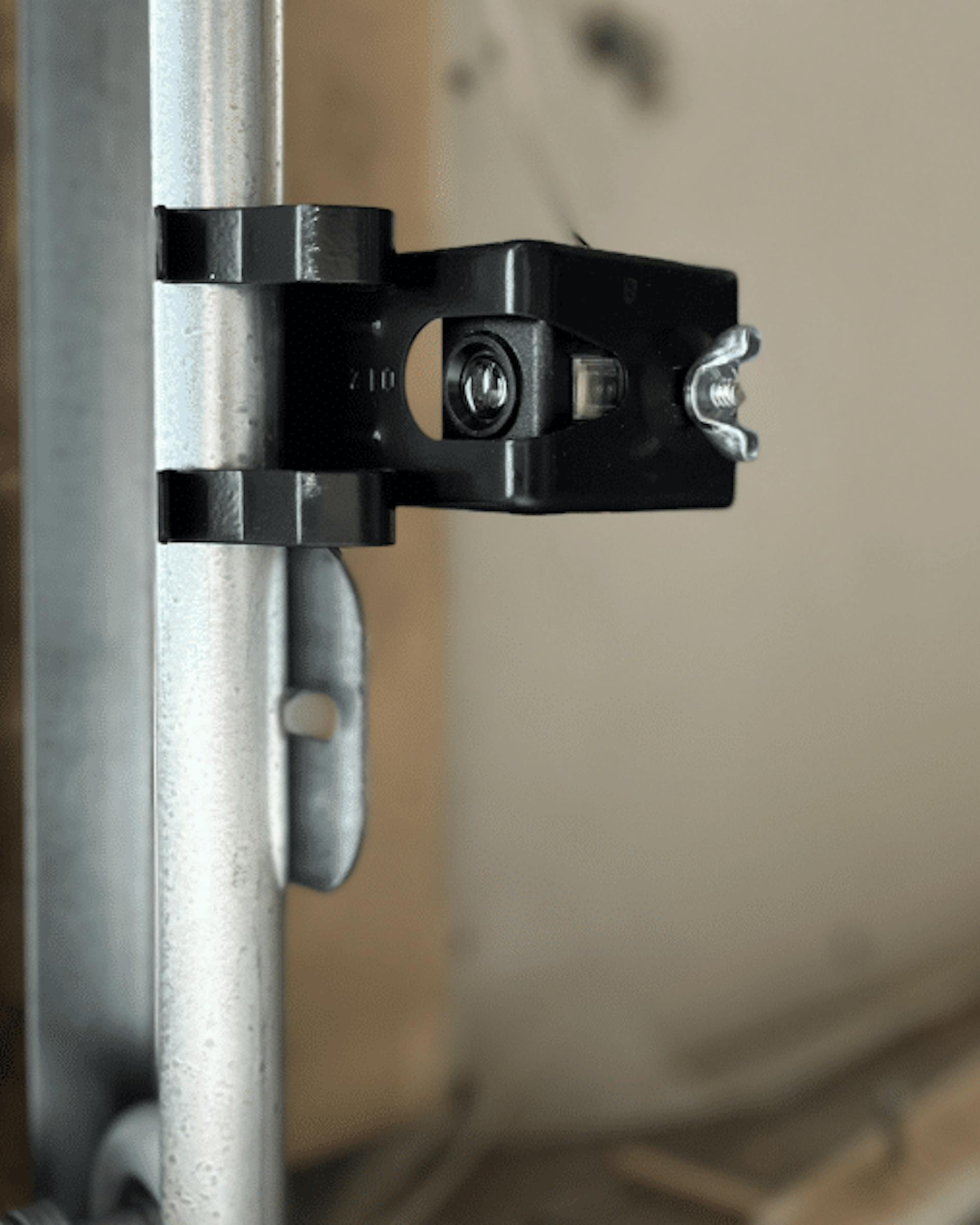
Safety photo eyes (also called photo cells) are a pair of small sensors installed on either side of your garage door track, usually 4–6 inches above the floor.
- The Beam: One sensor (the sender) emits an invisible infrared beam to the other (the receiver).
- The Safety Trip: If that beam is broken by a child, a pet, or even a stray trash can while the door is closing, the system instantly tells the motor to stop and reverse.
- The Law: Since 1993, these have been federally mandated on all residential openers. Operating a door without them isn't just risky—it’s a major safety violation.
How to Spot a Sensor Problem
You’ll know your sensors are acting up if:
- The door opens fine, but refuses to close.
- The door starts to close and then immediately reverses.
- The main overhead opener light flashes 10 times.
- The small LED lights on the sensors themselves are blinking or completely dark.
DIY Troubleshooting: 3 Steps to Success
1. The "Clean Sweep"
Because they sit so close to the ground, photo eyes are magnets for dust, dirt, and spiderwebs.
- The Fix: Take a soft, dry cloth and gently wipe the glass lens on both the sending and receiving units. Even a thick cobweb can be enough to "break" the infrared beam.
2. The Alignment Check
The sensors must be pointed directly at each other to work. If a trash can or a bicycle bumped one of the brackets, they will lose their "handshake."
- The Fix: Look at the LED lights. Solid green or amber means they are happy. If one is blinking or off, gently loosen the wingnut on the bracket and wiggle the sensor until the light stays solid.
3. The Sunlight Factor
In certain parts of the day, direct sunlight can actually "blind" the receiving sensor, making it think the beam is broken.
- The Fix: If your door only acts up when the sun is hitting it, you may need to create a small "sun shield" (like a piece of cardboard) or call us to swap the positions of the sender and receiver.
Quick Reference: Sensor LED Guide
Light Status | Meaning | Action Required |
Solid Green/Amber | Perfect Alignment | None—your door is safe! |
Blinking Light | Misaligned or Dirty | Clean lens and realign bracket. |
No Light at All | Power or Wiring Issue | Check for loose/broken wires. |
When to Call the Pros
If you’ve cleaned and aligned the sensors but the lights are still off, you likely have a wiring issue. Over time, wires can become brittle, staples can pinch them, or rodents (as we mentioned in our last post!) can chew through them.
Lions Gate Garage Doors Ltd. provides expert diagnostics and sensor replacement to ensure your door meets all safety standards. Don't risk a heavy door closing on what matters most.